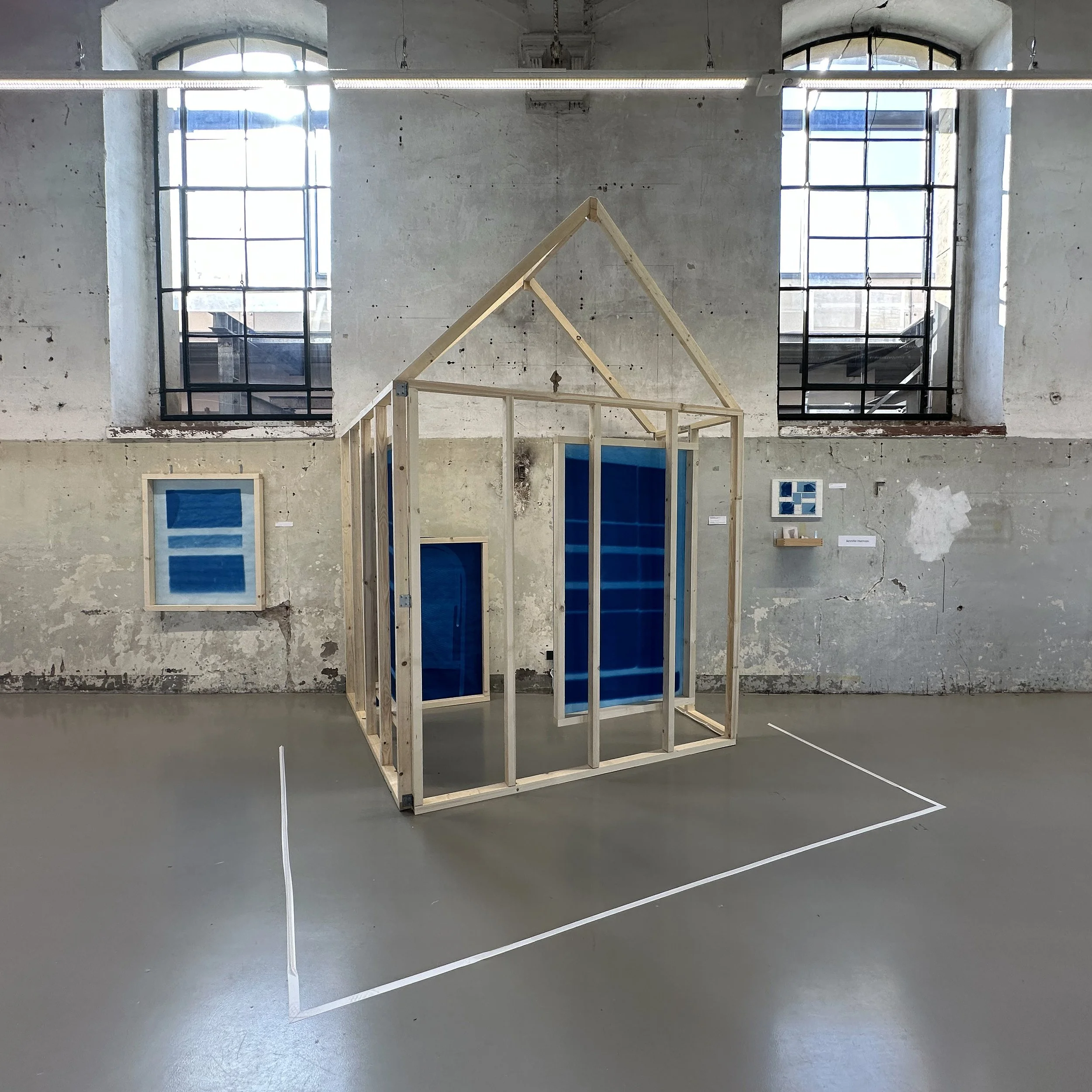
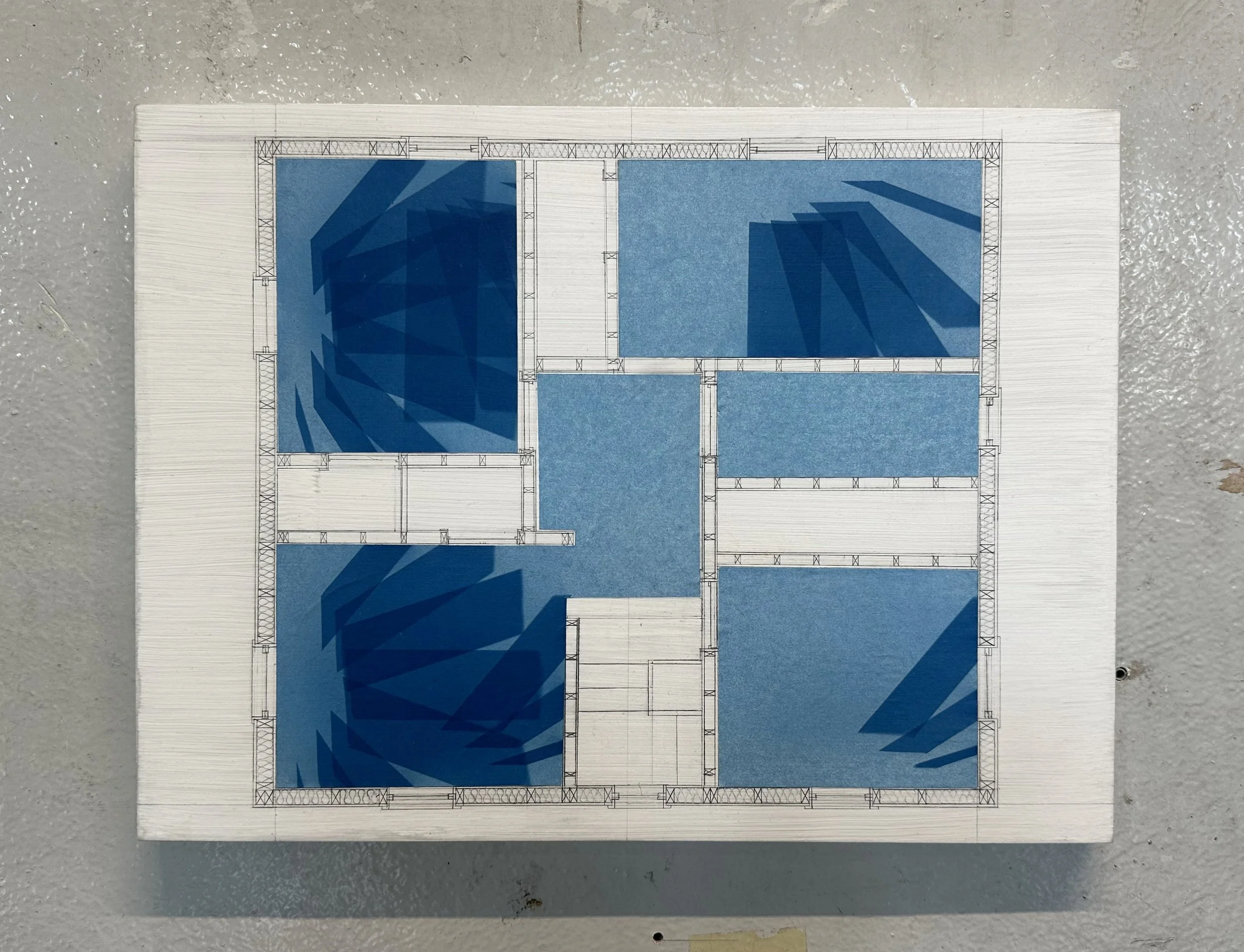
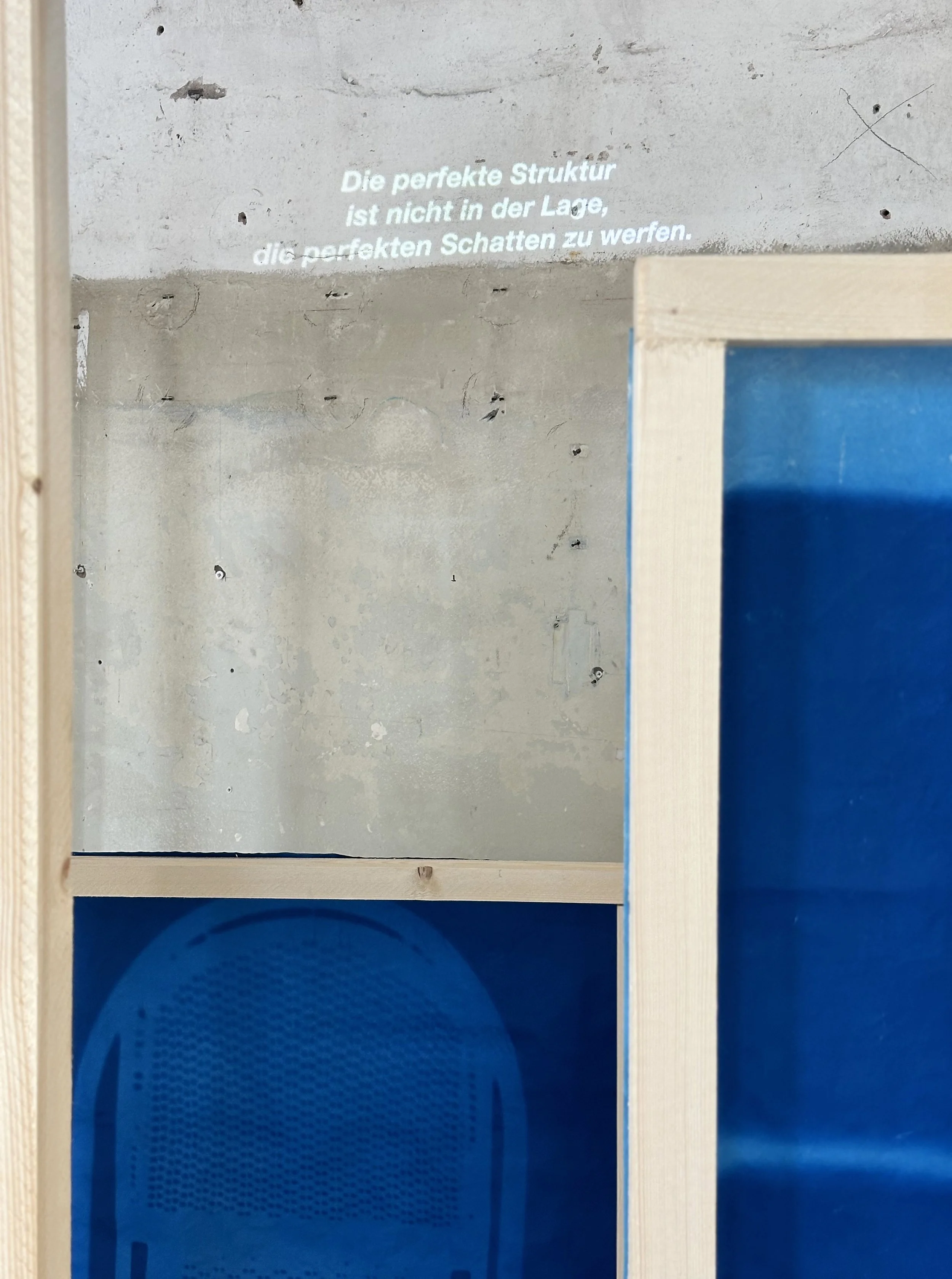
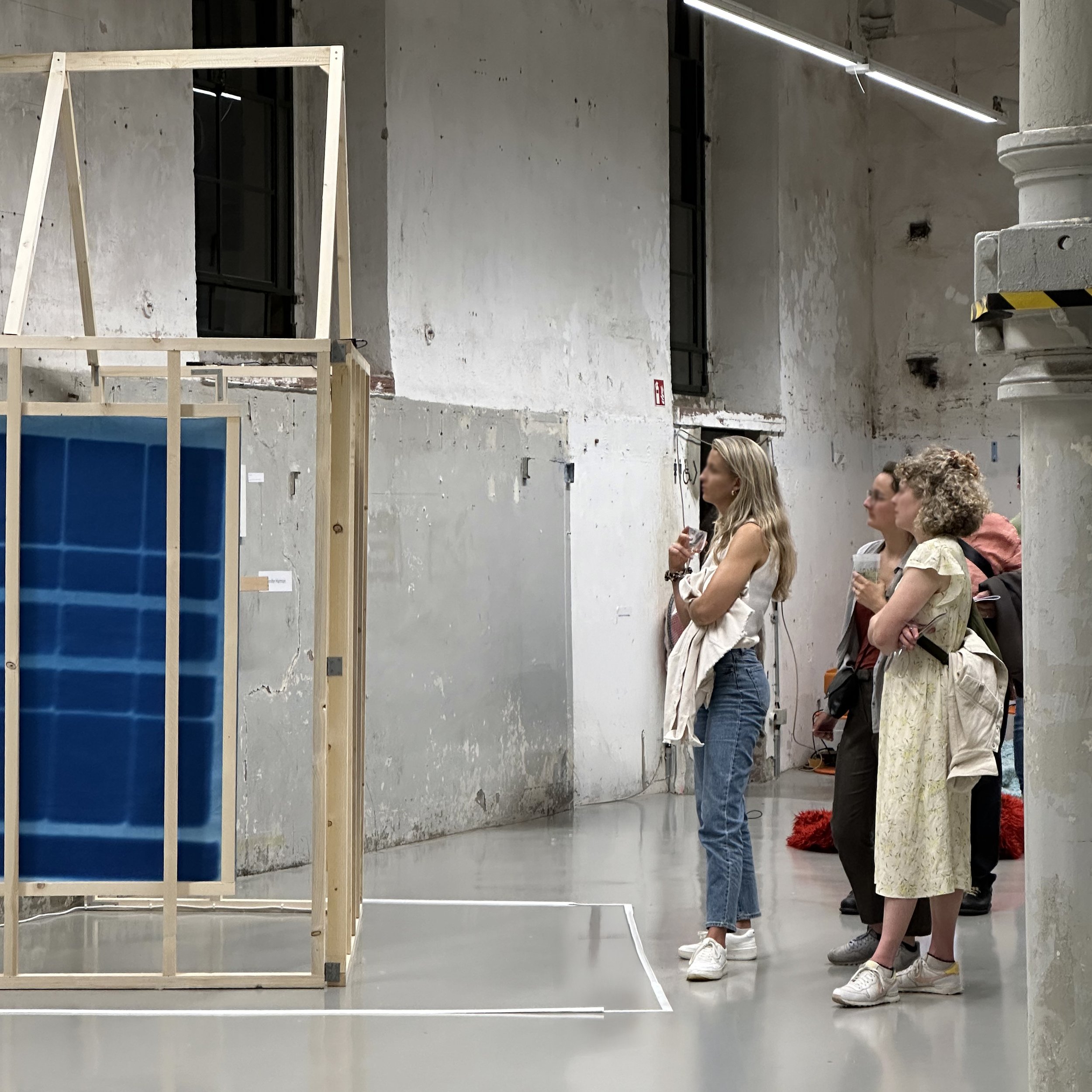
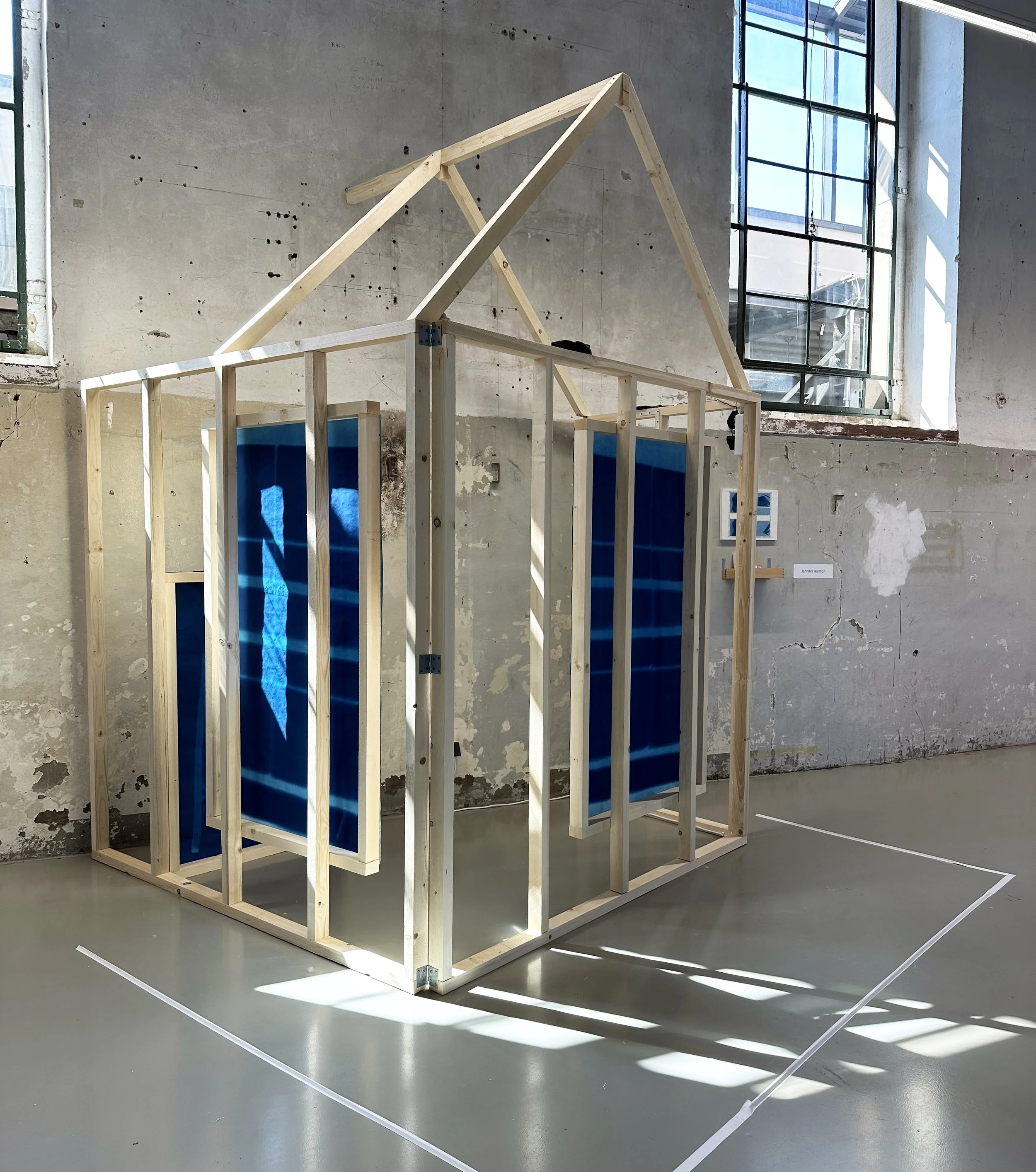
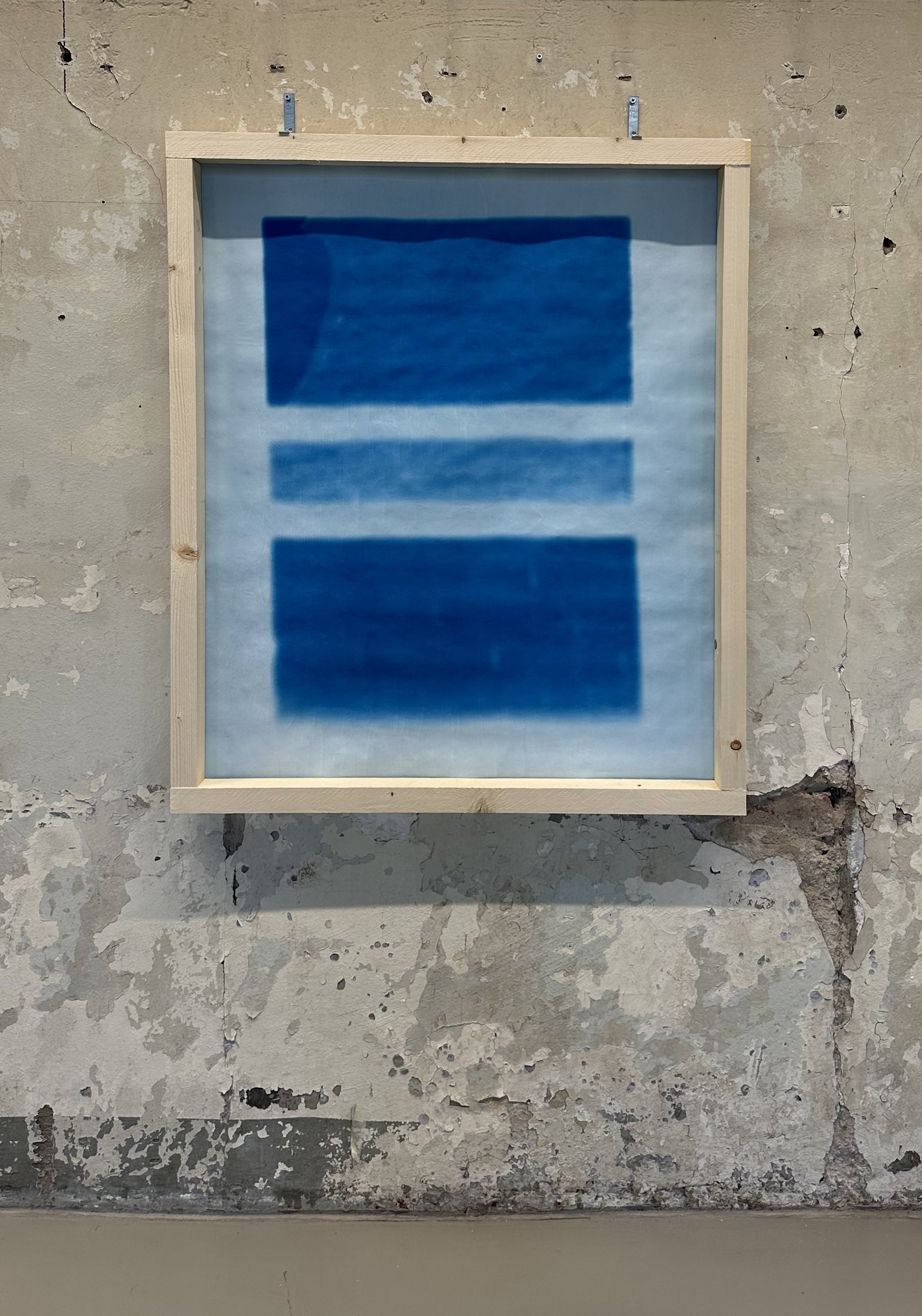
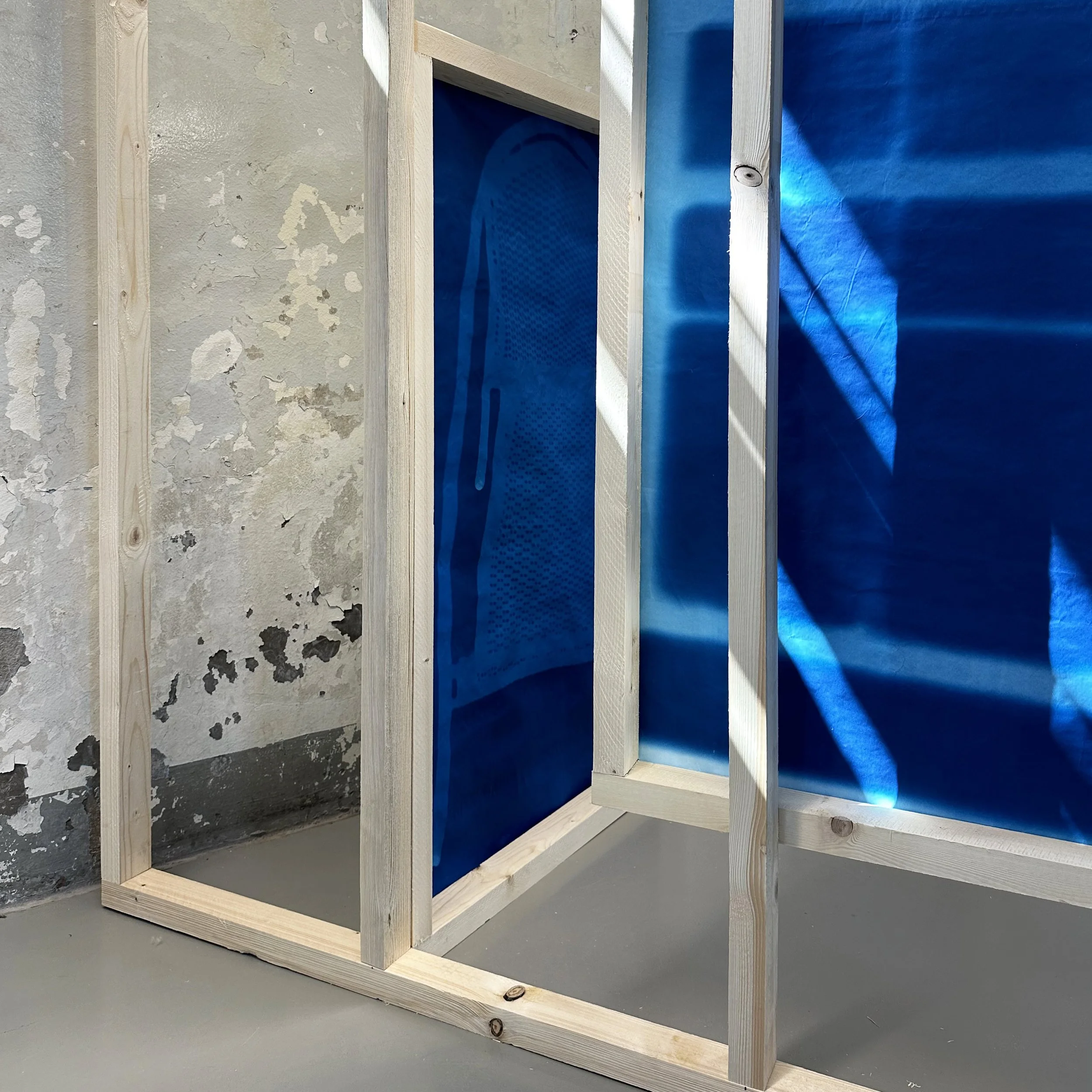
The Perfect Structure is Incapable of Casting the Perfect Shadow is an installation that highlights western culture’s contradictory expectations on women from a personal perspective of a female American architect working in Germany.
A house emerges from the wall but not at a right angle, instead it invades the male space. Windows of opportunity are represented with imperfect shadows of real windows, they are not transparent, rather opaque, and place behind the jail like cell of the domestic structure. A chair sits all but invisible, politely In her corner against the wall, hidden by the fake windows of opportunity.
Media Pine, Cyanotype on Paper, Hardboard, Gesso, Graphite, Projection
Genre Installation
Size 200 cm × 250 cm × 300 cm
Year 2024
DE
Mit Blick auf den Himmel wird das Sternbild Draco innerhalb der nördlichen Hemisphäre als dauerhafte Entität erkannt, denn im Laufe des Jahres setzt es niemals ein. Draco ist heute wie seit Jahrhunderten eine ständige Position am Himmel. Als solche haben ihre Sterne als Navigationsführer über Ozeane und weite Landschaften gedient.
Obwohl die funktionale Bedeutung von Draco in Unruhe geraten ist, werden die Konstellation und die anderen Strichfiguren in der Nacht immer noch an einem wahrgenommenen, "flachen" Himmel erkannt. Die Domebene über unseren Köpfen ist jedoch eine wahrgenommene Abstraktion, denn innerhalb dieser Konstellationen existieren die Sterne in unterschiedlichen extremen Entfernungen von der Erde und voneinander.
Starfield untersucht die Querschnittsverhältnisse der Sterne im Gegensatz zu der scheinbaren Ebene des Abendhimmels, einer Gegenüberstellung der Konfiguration gegenüber dem Raum eines städtischen Innenhofs. Es stellt nicht nur die räumliche Beziehung der Sterne dar, sondern kontrastiert auch den einst sichtbaren Himmel, der jetzt durch die kontrastierenden Lichter der Stadt verblasst wird. Um diesen Moment des Kontrasts zu schaffen, besteht die Installation aus einer beleuchteten Rahmenmatrix aus verbundenen Sternpunkten, die über den Köpfen der Öffentlichkeit hängt.
Das Matrixdesign positioniert die Sterne in Bezug auf die typische Art und Weise, wie sie normalerweise gesehen werden, zweidimensional, sie sind jedoch innerhalb einer maximalen Schnitttiefe von drei Fuß verschoben. Die erhabene Länge ist proportional zum Abstand zwischen der Erde und jedem einzelnen Stern. Sterne, die weiter von der Erde entfernt sind, werden höher angehoben, während sich nähere Sterne näher am Hofboden befinden. Diese Punkte, die durch Aluminiumrohrelemente trianguliert und physisch gemacht werden, erzeugen ein dreidimensionales Delauney-Netz. Um das Starfield weiter darzustellen, hält jedes Glied oder Sternpunkt eines Mitglieds ein LED-Licht. Dracos Sterne sind weiß, während die umgebenden Punkte blau sind, um die Konstellation zu identifizieren.
Durch das Füllen der dachlosen Leere des Innenhofs wird das abstrahierte Bild des wahrgenommenen Himmels durch eine dreidimensionale Darstellung ersetzt. Während sich die Besucher unter der Installation bewegen, wird Dracos Konstellation von seinem erdgebundenen Image befreit und stellt seine räumliche Konfiguration wieder her.
EN
Looking to the heavens, the constellation Draco is recognized as an entity of permanence within the Northern Hemisphere, for as the year passes, it never sets. Draco holds a constant position in the skies today as much as it has for centuries. As such, its stars have served as navigational guides over oceans and vast landscapes.
Although the functional significance of Draco has dithered, the constellation and the other line drawn figures in the night are still recognized on a perceived, “flat,” sky. However, the domical plane above our heads is a perceived abstraction, for within these constellations, the stars exist at varying extreme distances from Earth and from each other.
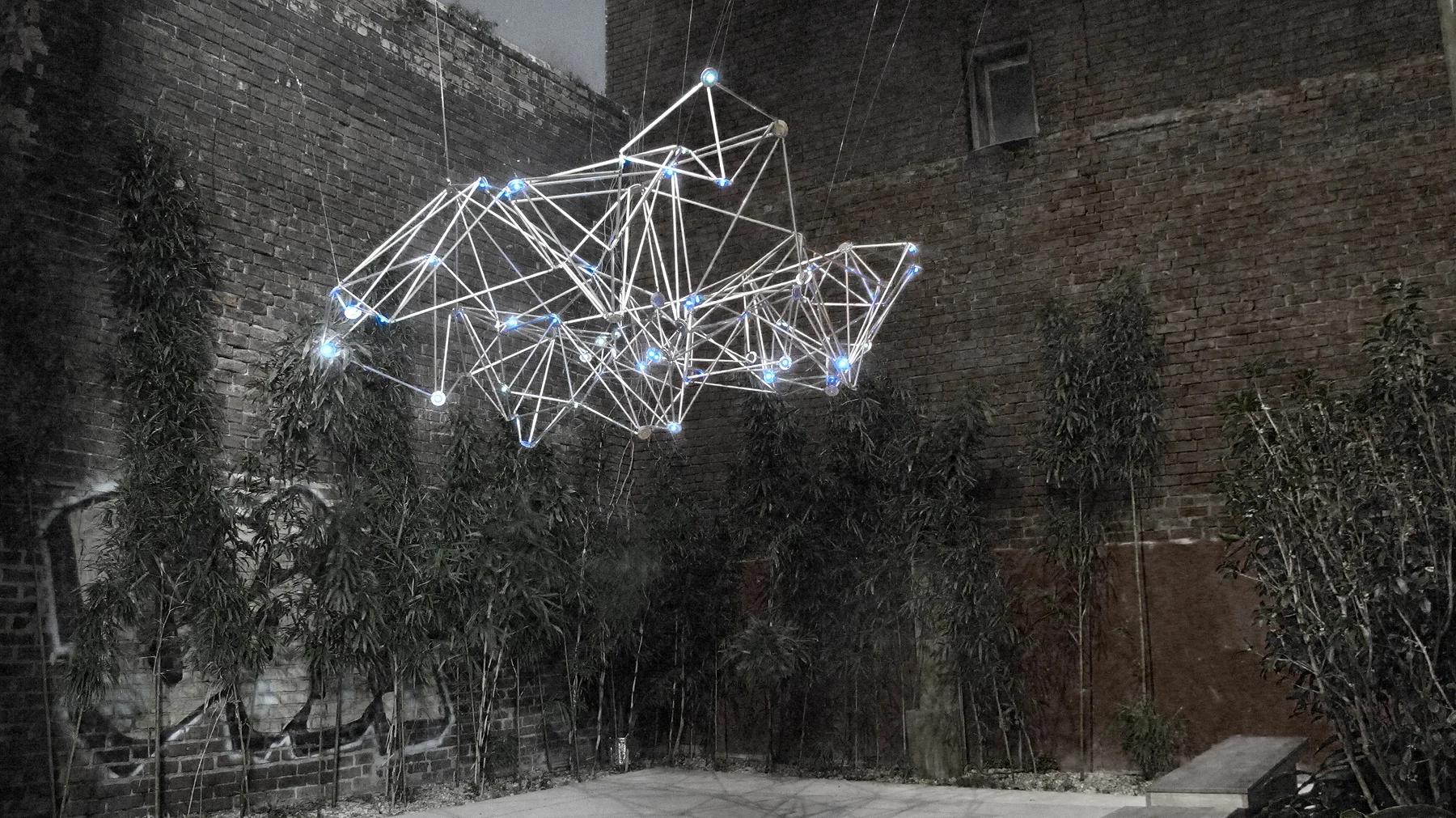
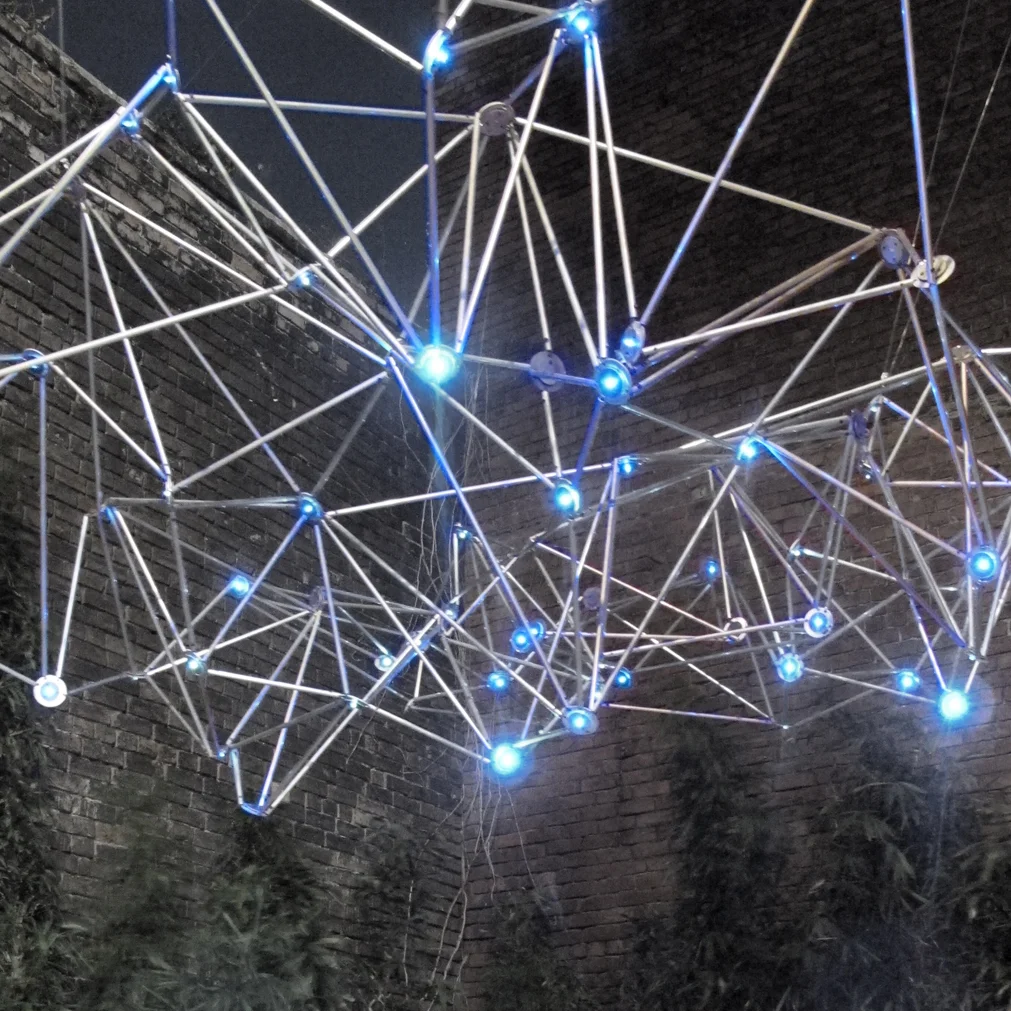
Starfield investigates the sectional relationship of the stars in contrast to the apparent flat of the evening sky, a juxtaposition of the configuration against the space of an urban courtyard. It represents not only the spatial relationship of the stars, but also contrasts the once visible sky that is now faded by the contrasting city lights. To create this moment of contrast, the installation is a lighted frame matrix of linked star points that is hung above the heads of the public.
The matrix design positions the stars with respect to how they are typically seen, two dimensionally, but they are shifted within a maximum section depth of three feet. The raised length is proportionate to the distance between the Earth and each individual star. Stars farther away from Earth are raised higher, while closer stars are located closer to the courtyard floor. These points, triangulated and made physical by aluminum pipe members create a three dimensional Delauney mesh. To further represent the Starfield, each member joint, or star point, holds an LED light. Draco’s stars are white, while surrounding points are blue to assist in identifying the constellation.
By filling the roofless void of the courtyard, the abstracted image of the perceived sky is replaced by a three dimensional representation. As visitors move under the installation, Draco’s constellation is released from its earthbound image and reclaims it’s spatial configuration.
2011
Concept + Project Leader: Jennifer Harmon
Design Team: Joshua Kehl, Spencer Kroll, Cathy Pyenson, Ben Thomas
Assistance: Peter von Buelow, Maciej Kaczynski, Missy Ablin, Will Martin, Logan Wiedman, Wencan Xue, Michael Glenboski
Made possible by the generous support of the A. Alfred Taubman College of Architecture and Urban Planning at the University of Michigan and the New Orleans AIA DesCours
original installation in New Orleans
unique aluminum star-connectors were developed using a grasshopper script and later produced using cnc water jet cutting technology
elevation, plan, schematic diagram, exploded assembly
visitors lay beneath starfield and stargaze while pointing at Draco
starfield electrical diagrams
otherworldly experience in the studio before deployment
starfield aloft in the studio
different phases of assembly
tools used in assembly
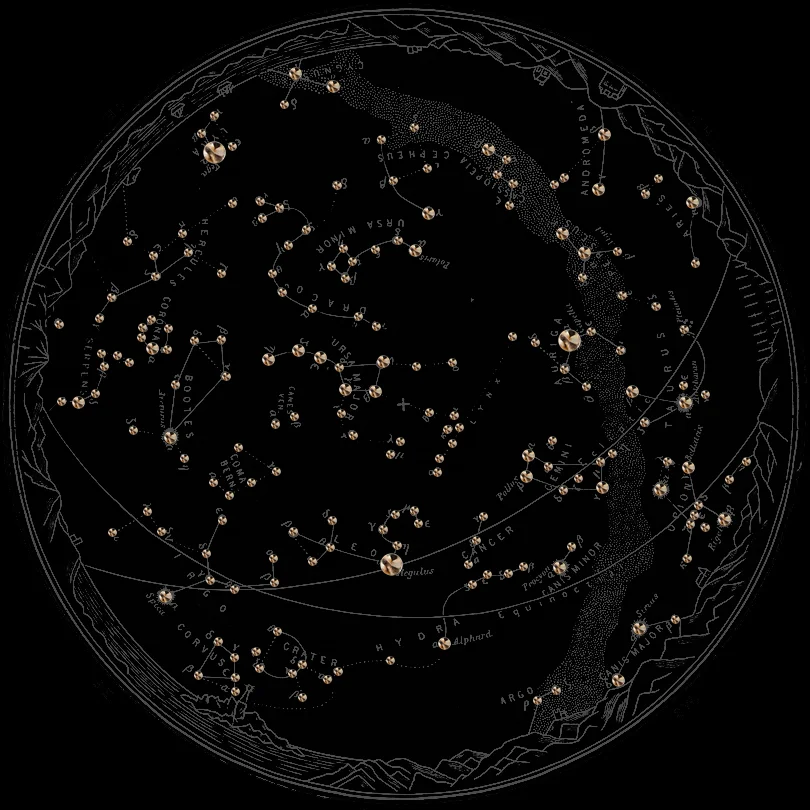
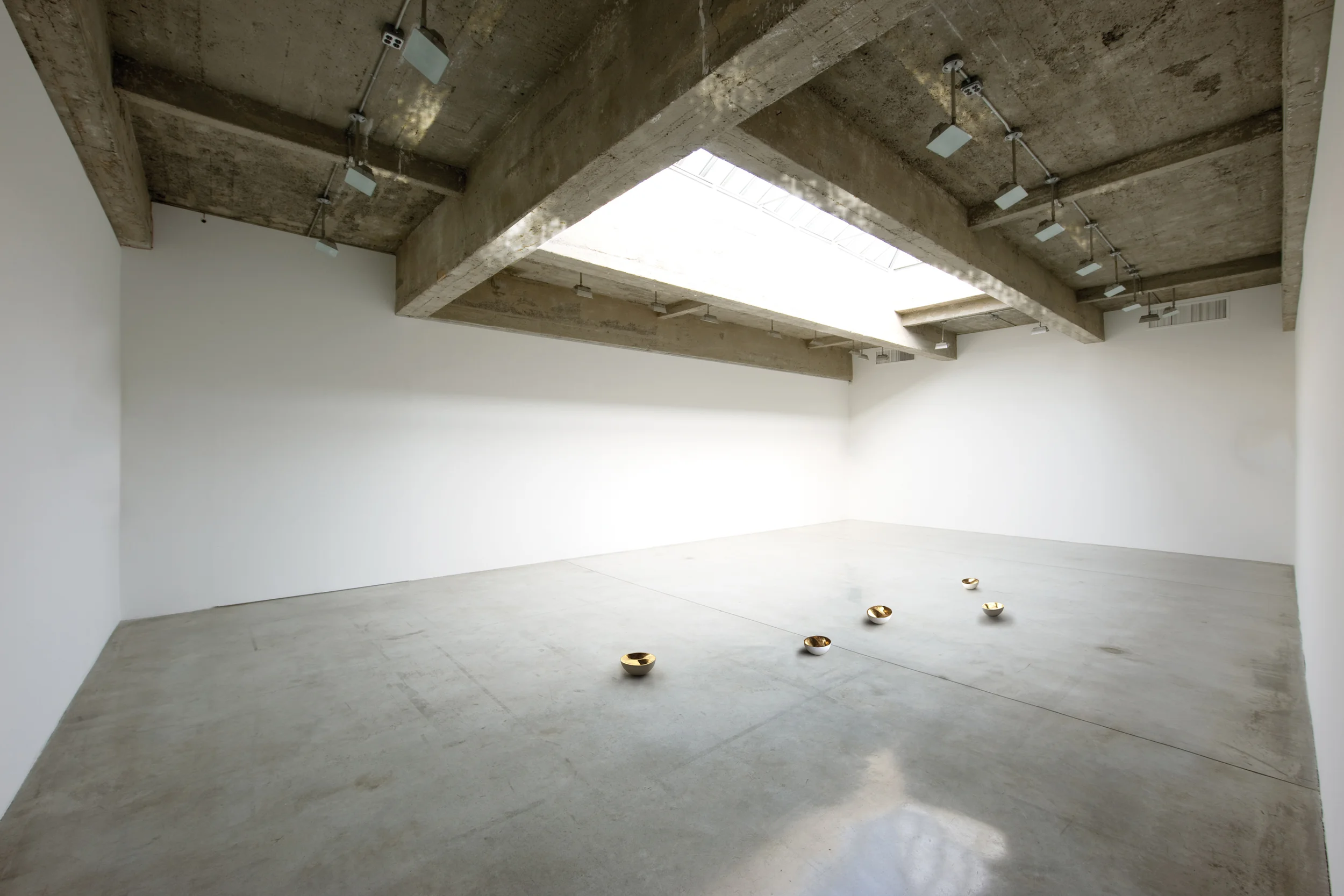
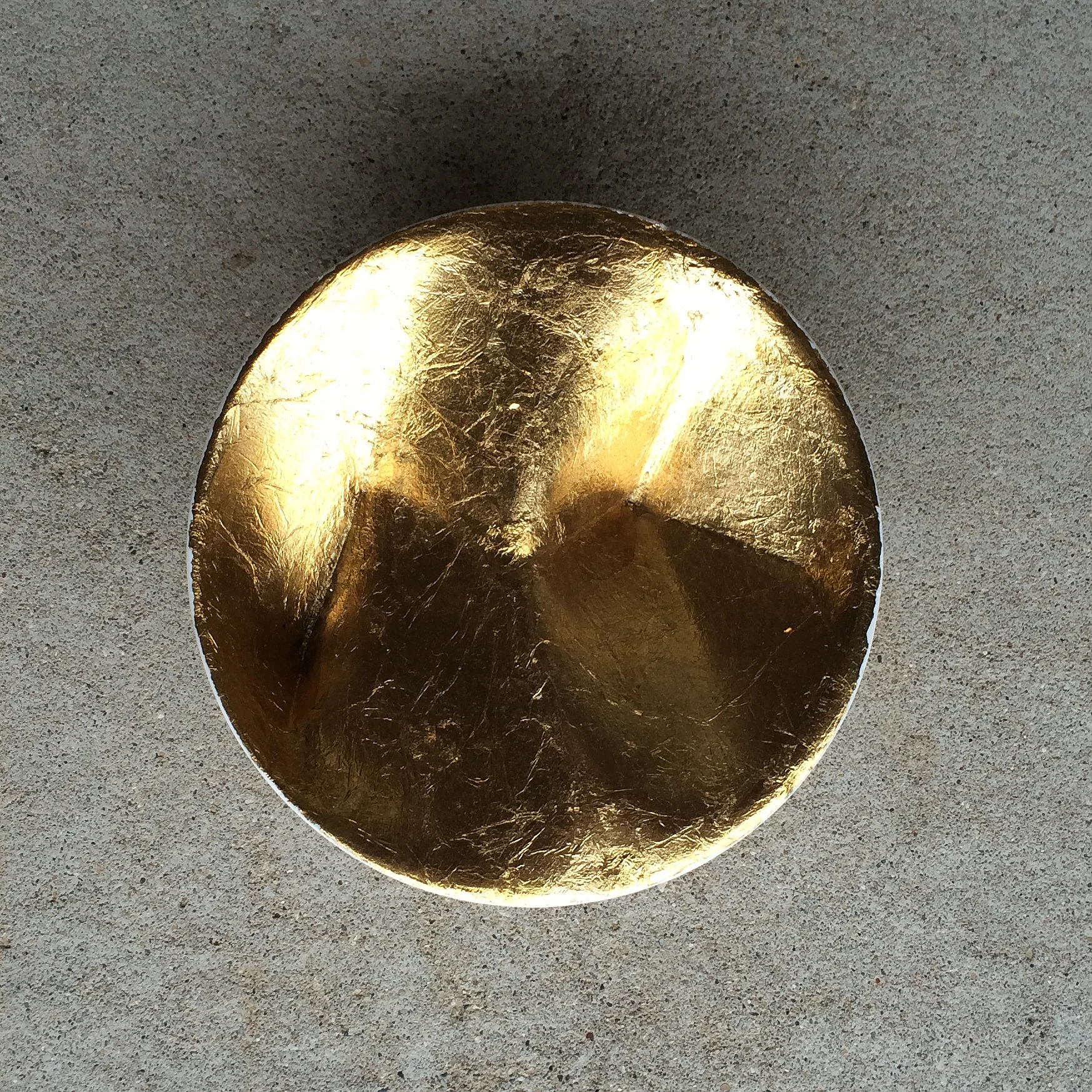
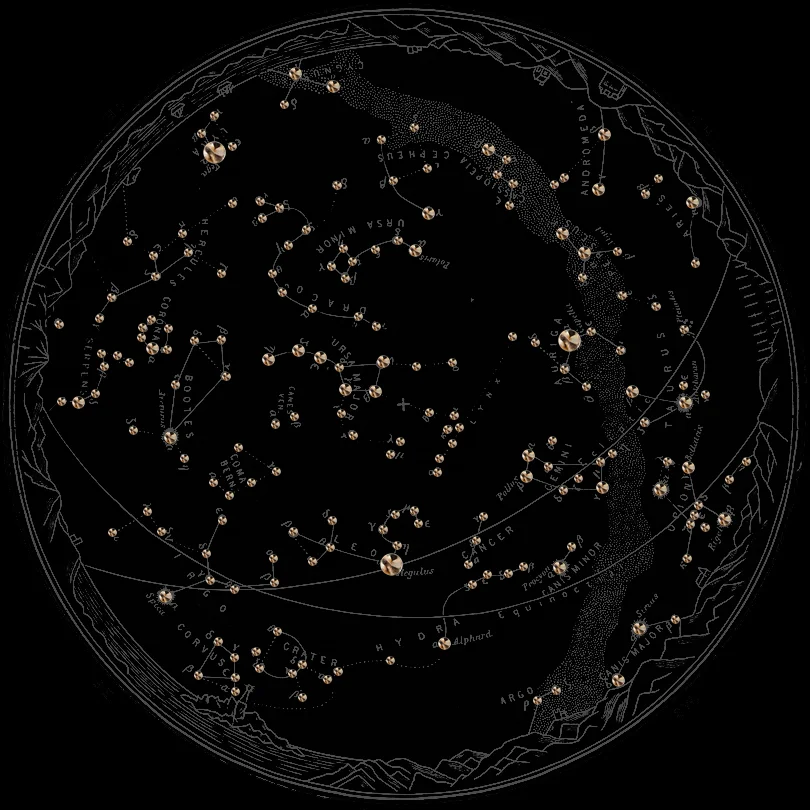
The worlds that lay beyond our perception of the night sky's image of brightly specked lights presents vast galaxies, solar systems and other celestial bodies. These heavenly lights have provided gateways into fantasies, led our ancestors across the varied terrains of our own planet.
The Starcatchers are a cluster of physical hemispherical objects with complex non-euclidean geometries informed by the arrangement and relative distances to our eyes. They cluster to catch light from beyond our own world, and reflect it back onto our bodies transforming atmospheres into spaces of scintillating light.
Medium: CNC Routed Plaster with gold leaf
Lead Design: Jen Harmon
Assisted by: Joe Chemello
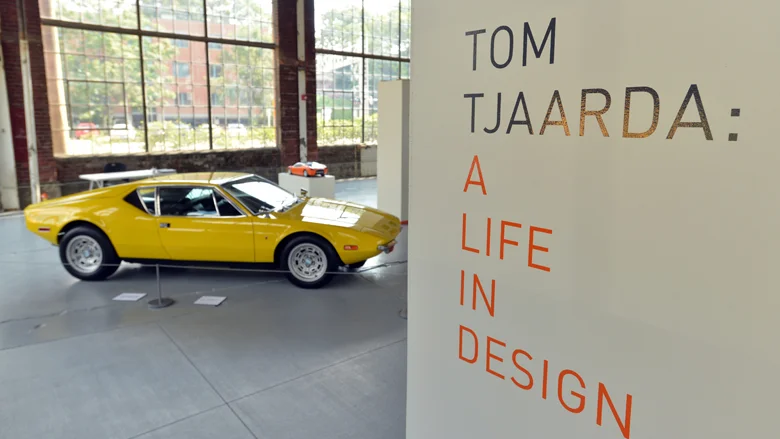
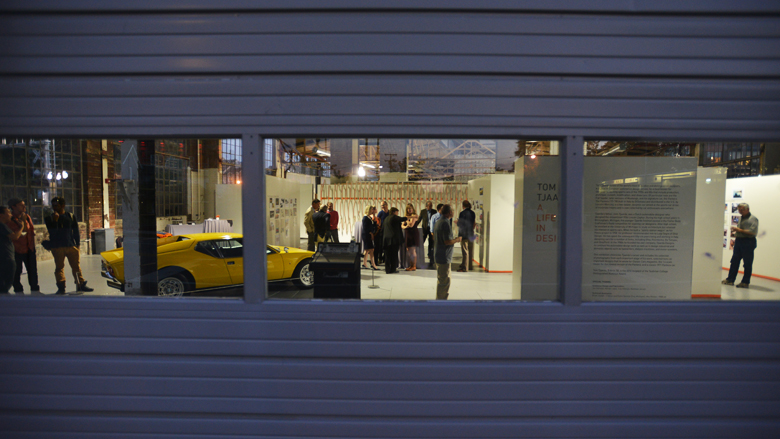
Tom Tjaarda is a legendary automotive designer. Educated at Taubman College of Architecture, his visionary ideas about automobile design earned him the chance as a young designer to work in the automotive industry in Torino, Italy. He has designed automobiles for Ghia, Pinafarina, DeTomaso, and FIAT to name a few.
Tjaarda was honored with the Taubman College Distinguished Alumni Award in 2014, a distinction that comes with a retrospective exhibit of the designer’s life work.
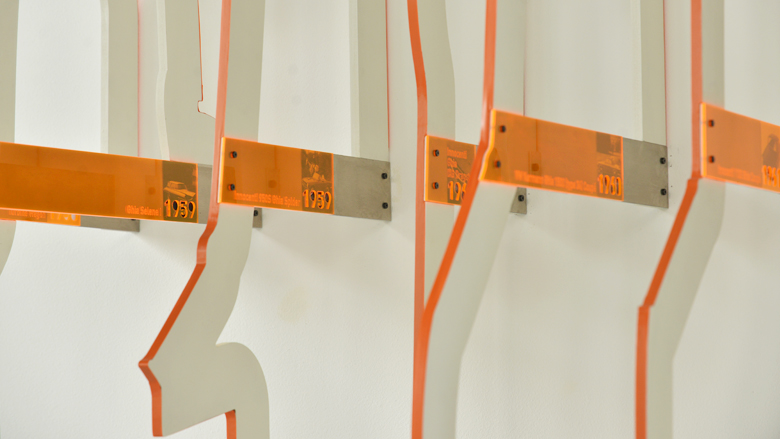
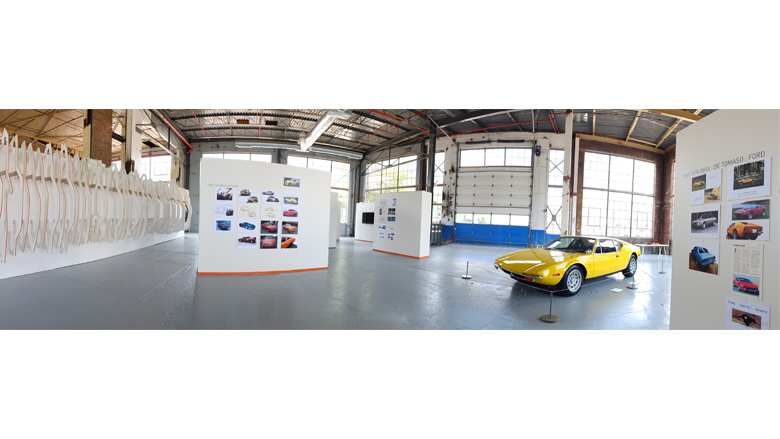
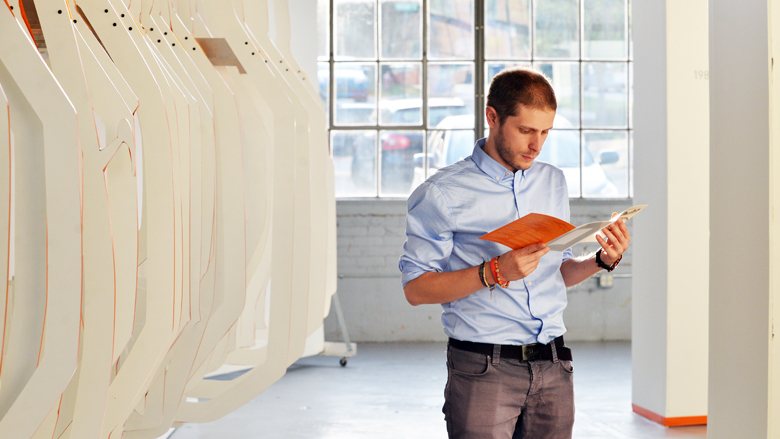
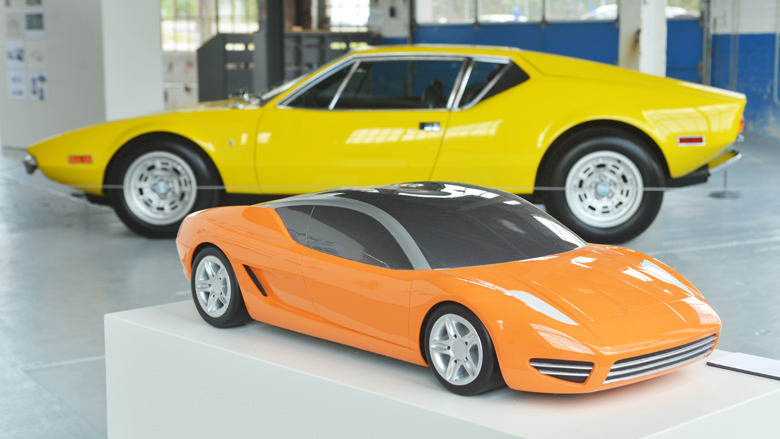
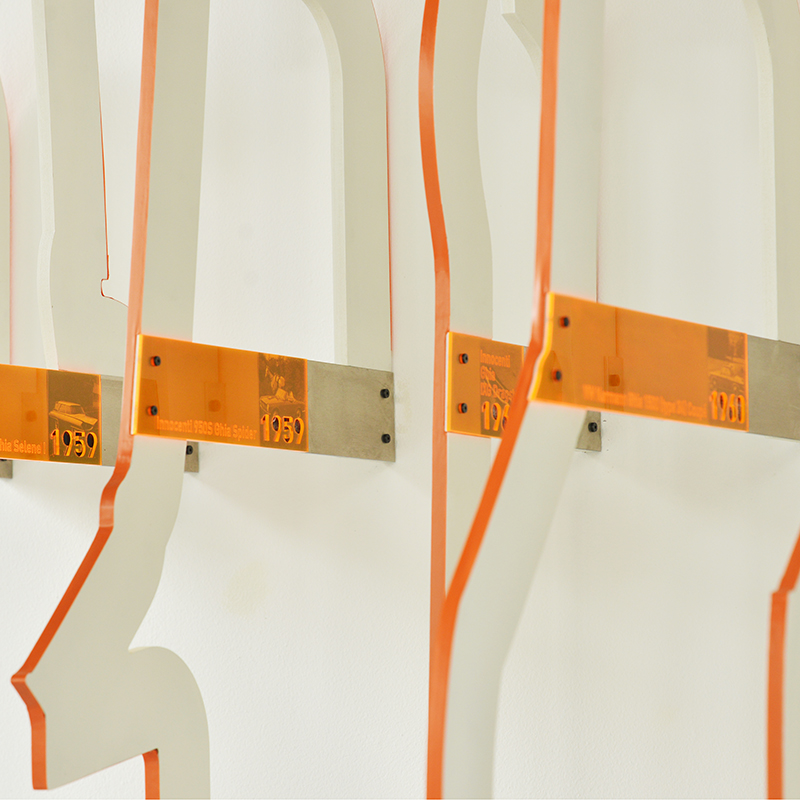
The content of the exhibit was organized around a continuous loop of space that touched on significant moments in automative design. A timeline of his career was catalogued through a chronologic index made from the profiles of every automobile that he designed. These car profiles were produced using various CNC modes of produciton. Each profile included the name, date and monochromatic photo of the automobile. The exhibit was accompanied by a pristine 1971 DeTomaso Pantera, one of his most popular designs.
2014
Exhibition Director : Mary Ann Wilkinson
Lead Designer : Jen Harmon
Design Team : Matthew Jensen, Adrian Lopez, Troy Hillman
Fabrication Assistance : Wes McGee
Automobile Assistance : Brian Joseph, Classic & Exotic Service, Troy, MI
Photography : Peter Smith
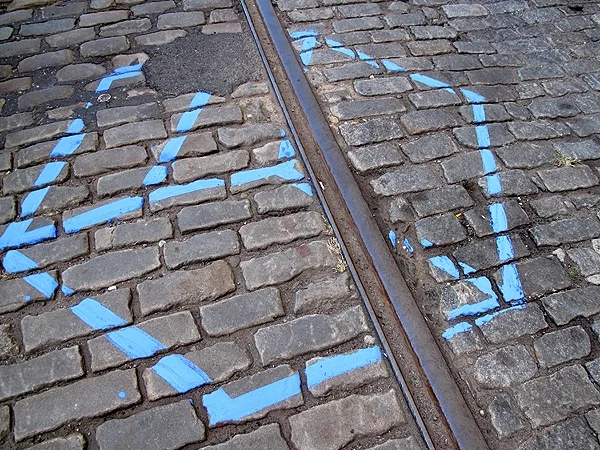
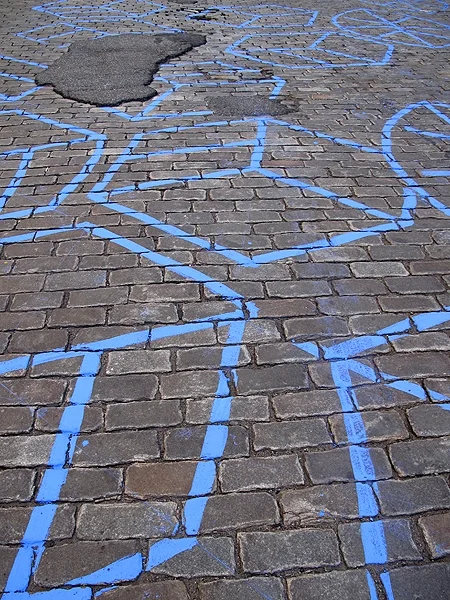
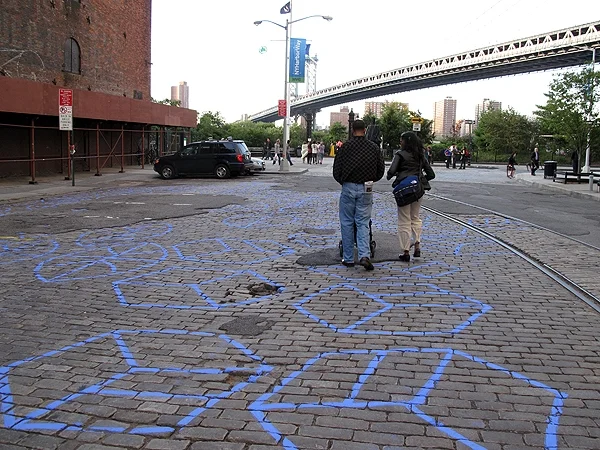
Between the shadows of the Manhattan and Brooklyn bridges lies a post industrial neighborhood known as DUMBO. The Roads are layered with time and reveal a thin geologic strata scared by heavy use, erosion and deterioration. Asphalt patches yield themselves to forgotten sidewalks, rail lines and vast expanses of pitted cobblestone streets. Walking across these spaces is like walking back in time, the industrial history of this neighborhood is palpable.
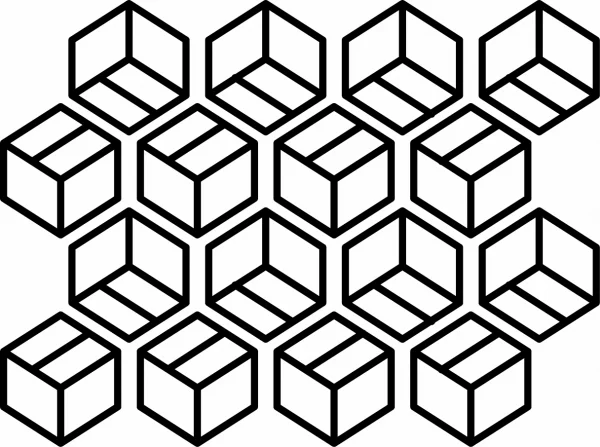
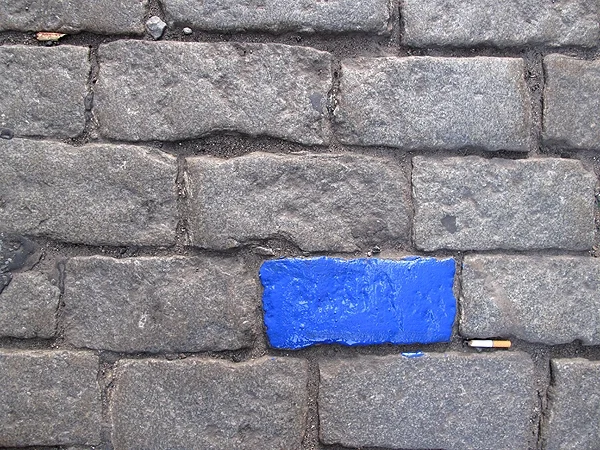
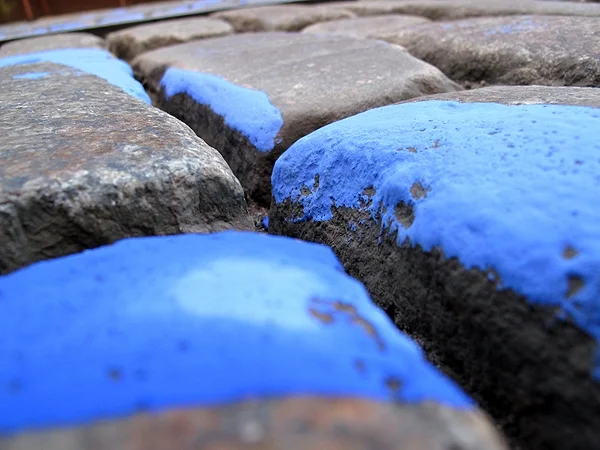
Between the site of an old box and tobacco factory rests a large patchwork of cobblestones and asphalt. Our intervention utilized a chalk and water mixture to create geometric patterns of boxes between the patchwork of roadway strata.
2009
Team: Golnar Adili, Emily Fischer, Jennifer Harmon
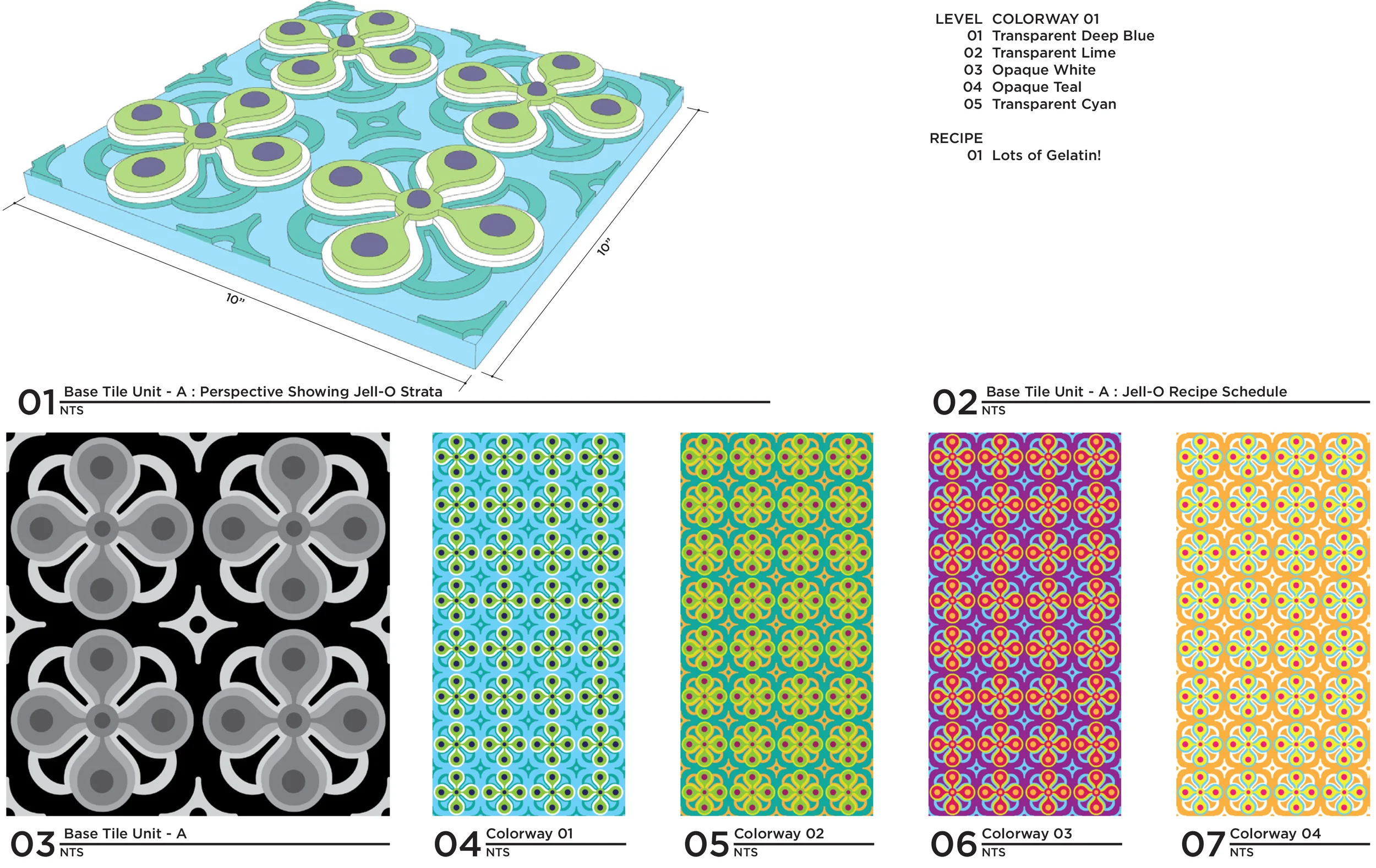
Keep Calm and Wobble On was the motto of Gowanus Studio's 2010 Jell-O Mold Competition. Wobble on we did. On the hottest day of the year in July 2010 we presented our edible Jell-O Wallpaper.
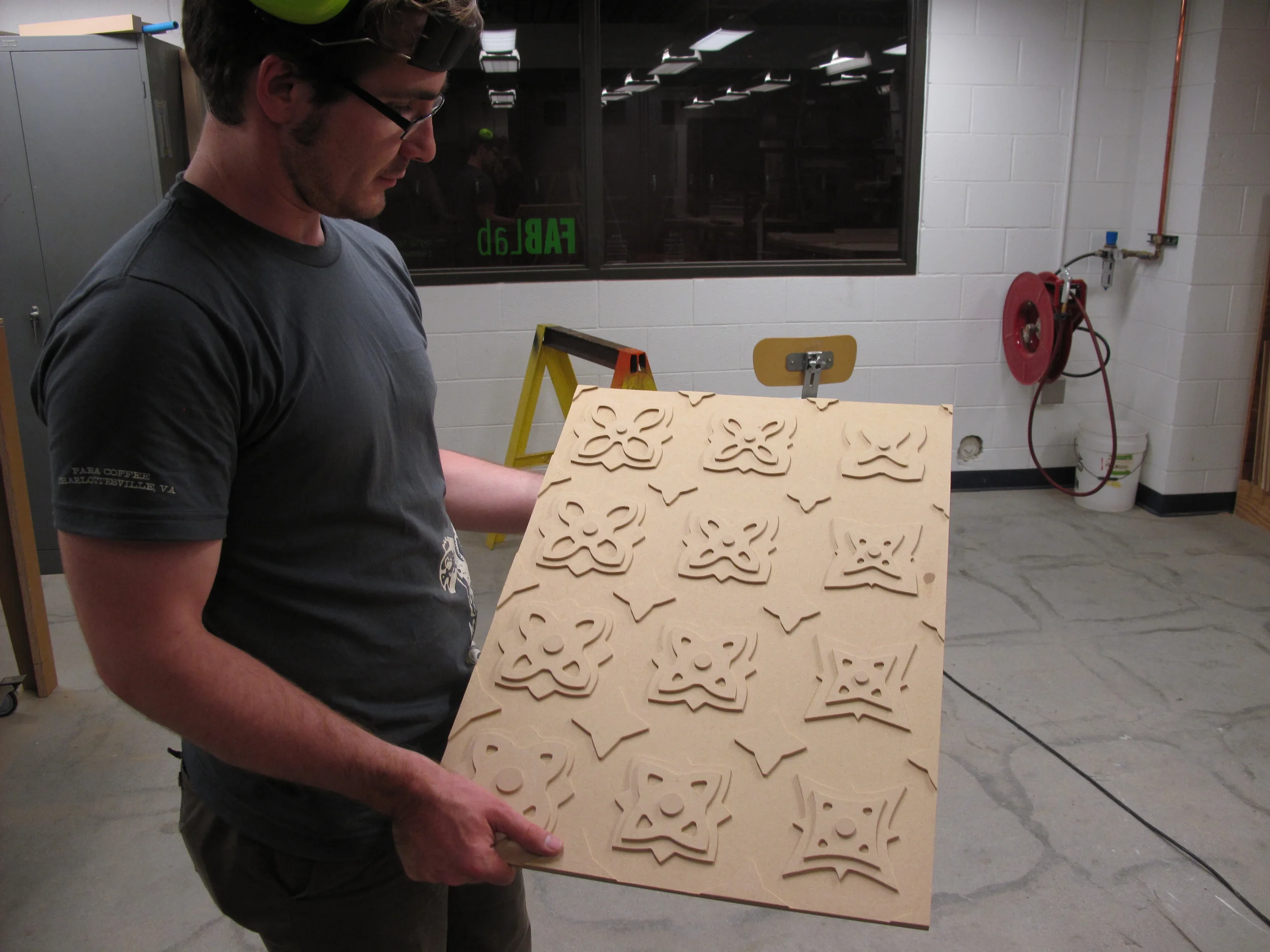
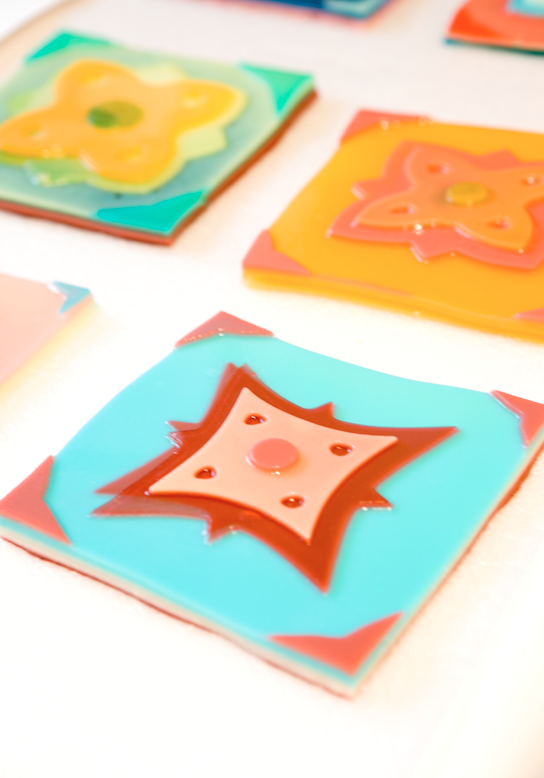
Cyanitecture joined forces with Haptic Lab and digi-fab guru Maciej Kaczynski of Studio Gang, to create an inspired, fast-paced experiment mixing culinary science, graphic design, and digital fabrication. The stratified elements within the pattern of our edible wallpaper were generated using generative scripting (rhinocerous + grasshopper) and translated into unique dimensional tiles. Jell-O molds were made of food grade vacu-formed polystyrene that took the shape of the 12 CNC routed MDF tiles.
The Jell-O Wallpaper was presented along with 17 other Jell-O creations at Gowanus Studio located in Brooklyn, NY, July 2010.
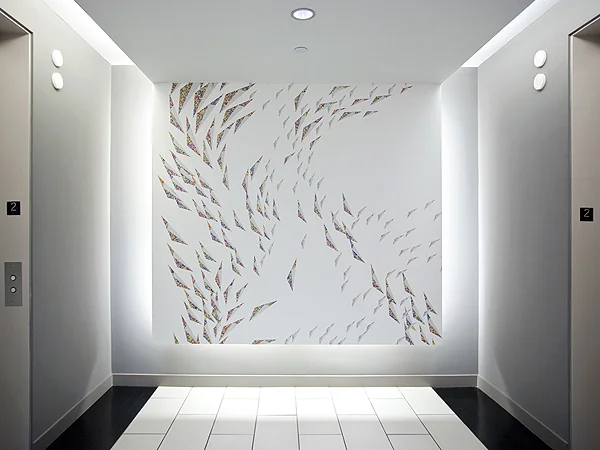
Inter Active Corporation is owned by the internet mogul, Barry Diller. IAC is located on the west side of Manhattan adjacent to the Highline in the epicenter of the starchitect cluster of buildings. IAC's building is known colloquially as the 'iceberg" but those in the design industry recognize the building as Frank Gehry's first New York City Commission.
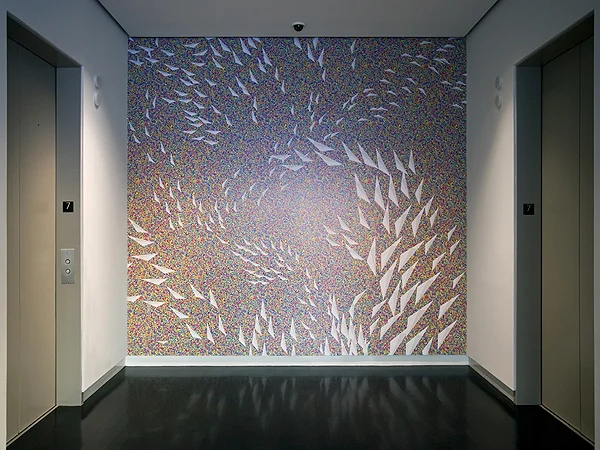
The buildings stark white interiors are beautiful but left Diller wanting more color. A series of artists were commissioned to generate distinct moments within the building that would serve as significant navigational points throughout the building.
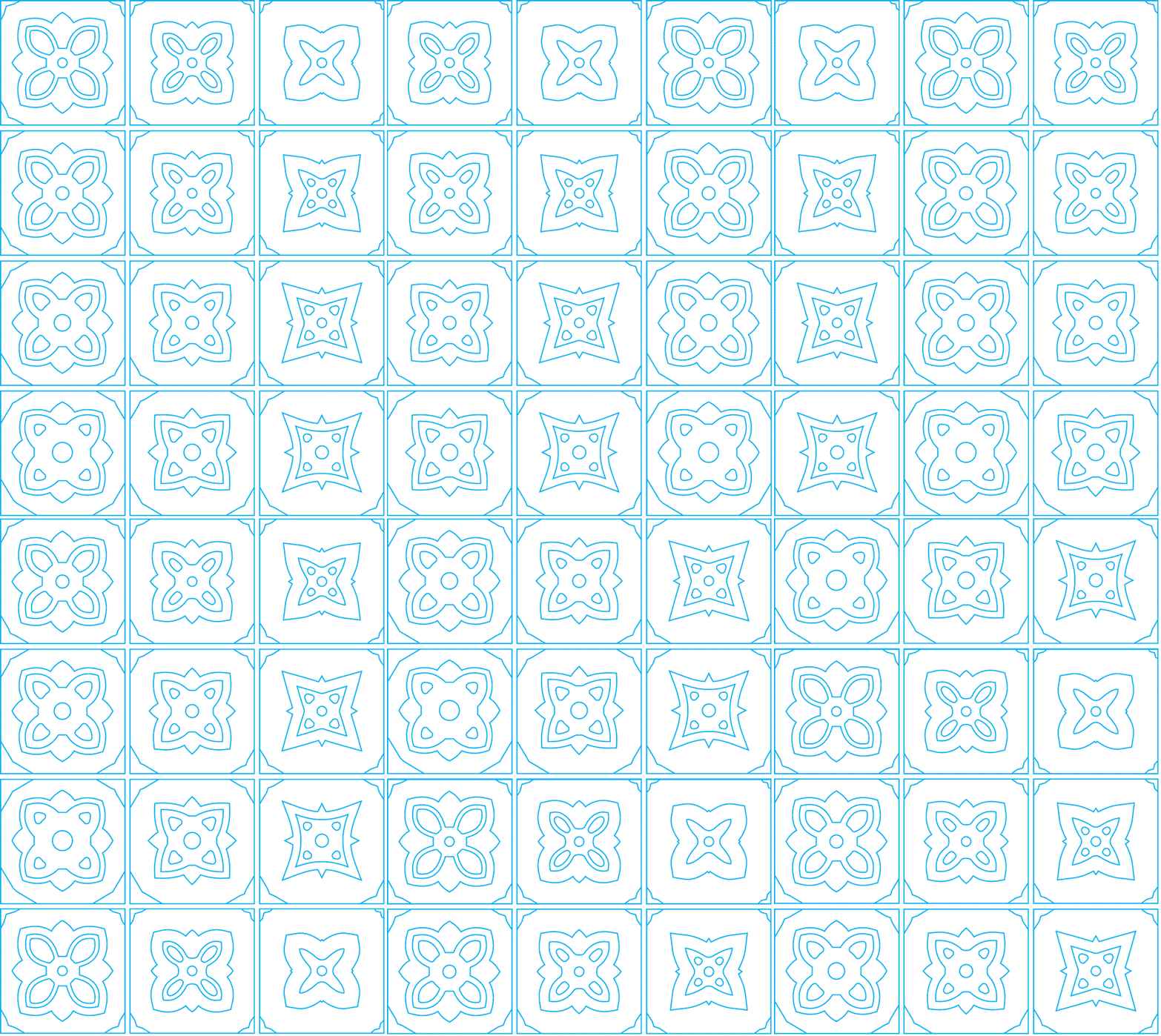
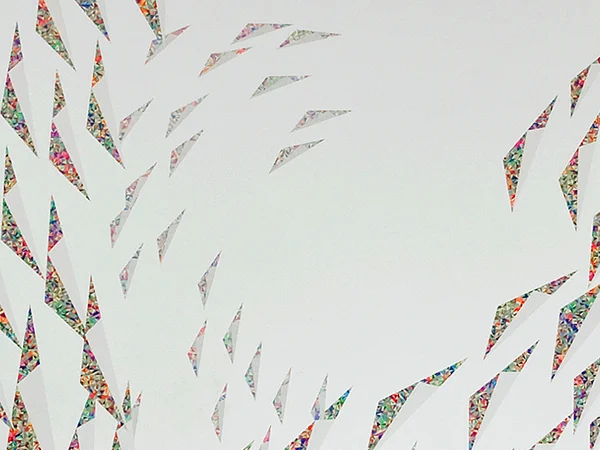
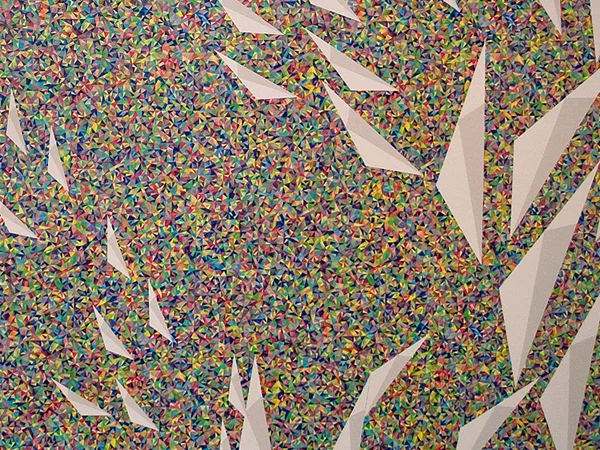
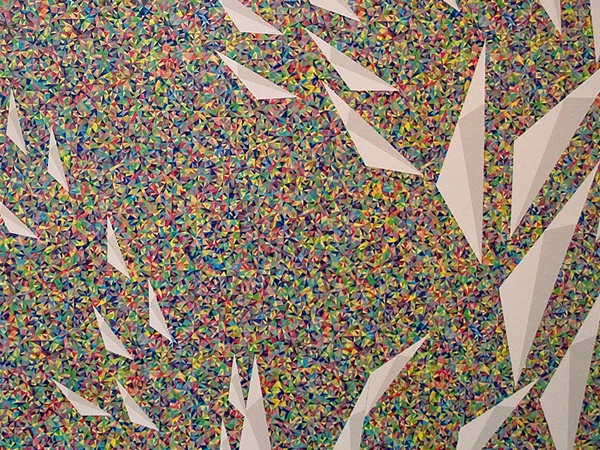
The design of the wallpaper located in each elevator lobby was generated using scripts that produced a randomized background triangle pattern. IAC logos flock in the foreground, shifting and migrating between the nine elevator lobbies.
Firma: A+I Design
Team: Jen Harmon, Emily Fischer
Photography © Magda Biernat